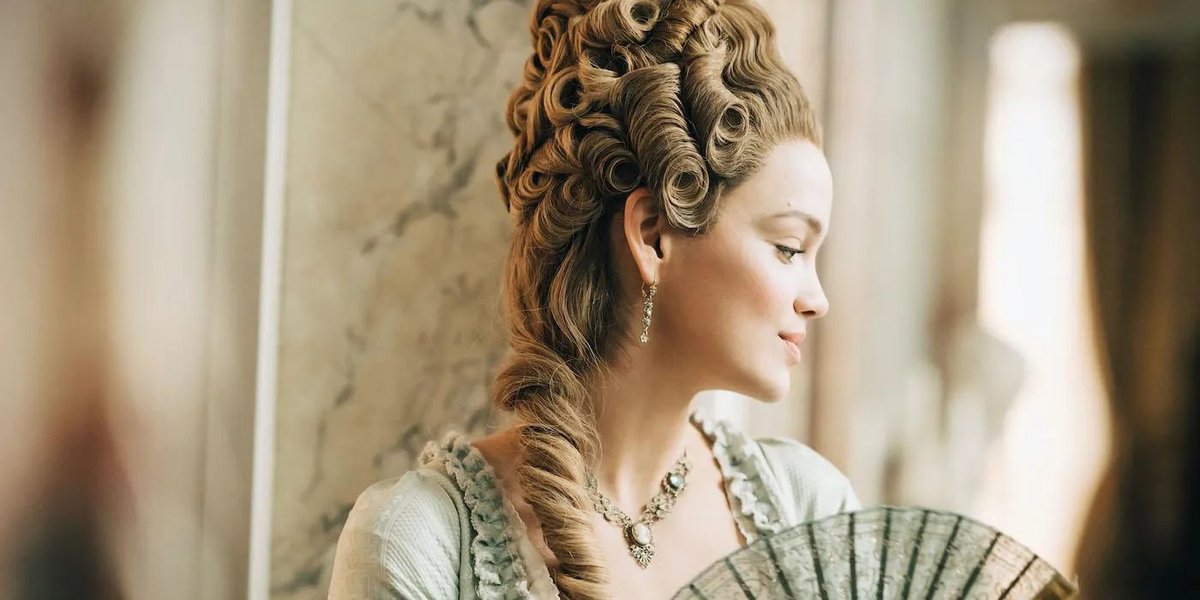
Step into the gilded, often perilous, world of Versailles, where a young Austrian archduchess navigates a glittering cage of duty, intrigue, and personal yearning. The Marie Antoinette TV series isn't just another historical drama; it's a vibrant, sometimes provocative, exploration of a teenage queen's journey from foreign bride to a symbol of both fascination and revulsion. If you're looking for a definitive Marie Antoinette TV Series Episode Guide & Summaries, you've come to the right place. We'll peel back the layers of powder and silk to reveal the heart of each episode, offering a trustworthy companion to your viewing experience.
At a Glance: Your Quick Guide to the Marie Antoinette Series
- What it is: A historical drama chronicling the early life of Marie Antoinette in France.
- Creator: Deborah Davis, known for her fresh take on historical narratives.
- Key Focus: Her transformation from a young Dauphine to Queen, navigating a new court, political pressures, and personal desires.
- Starring: Emilia Schüle as Marie Antoinette, Louis Cunningham as Louis XVI.
- Production: A collaboration between BBC and Canal+, developed by an all-female writing team.
- First Season: Eight episodes, charting her initial struggles and rise to power.
- Where to Watch: Premiered on Canal+, BBC Two, BBC iPlayer, PBS (US), Disney+ (Germany), among others.
- What Critics Say: Praised for its entertainment value and Emilia Schüle's performance; some noted its focus on drama over strict historical accuracy.
Entering the Sun King's Shadow: The Series Unveiled
Imagine being plucked from your home at just 14, sent to a foreign land, and tasked with securing a crucial political alliance simply by marrying a stranger and producing an heir. This is the daunting reality presented in Deborah Davis's Marie Antoinette, a series that breathes new life into the iconic, often misunderstood, figure. Produced by the BBC and Canal+, this drama dives deep into the personal and political struggles of Marie Antoinette, from her arrival in France as Dauphine to her complex reign as Queen.
The series boldly depicts her journey: a teenager initially isolated and pressured, forced to contend with an unresponsive husband, formidable rivals like Madame du Barry, and the crushing weight of expectation from both the Austrian and French courts. It’s a narrative rich with political maneuverings, personal betrayals, and ultimately, a queen's struggle for agency and affection in a world determined to define her. Far from a stoic historical recount, this show offers a vivid, human-centered perspective, showcasing a Marie Antoinette who is resourceful, vulnerable, and fiercely determined.
Behind the Curtains: Production, Cast, and Vision
Bringing 18th-century Versailles to life is no small feat, and the Marie Antoinette series spared no expense or detail. Commissioned by Canal+ as an English-language series for a global audience, it later secured a co-production deal with the BBC, cementing its international reach.
What sets this production apart is its creative core: an all-female writing team, spearheaded by Deborah Davis. This deliberate choice aimed to offer a nuanced, "feminist take" on Marie Antoinette's story, moving beyond traditional portrayals to explore her inner world, her challenges, and her agency in a patriarchal society.
Filming commenced in September 2021, transforming iconic French châteaux into the opulent backdrop for the series. Viewers can revel in the grandeur of Versailles, Vaux-le-Vicomte, Fontainebleau, and other historic sites, which lend undeniable authenticity and visual splendor to the narrative.
The cast is a blend of international talent, with Emilia Schüle taking on the formidable title role. Her portrayal anchors the series, capturing the youth, defiance, and eventual maturity of Marie Antoinette. Alongside her, Louis Cunningham brings a compelling depth to Louis-Auguste (later Louis XVI), depicting a man wrestling with his own insecurities and the immense pressures of the crown. Other notable cast members include Jack Archer, Jasmine Blackborow, Gaia Weiss, James Purefoy, and Marthe Keller, each contributing to the intricate tapestry of court life.
The first season, consisting of eight episodes, rolled out internationally through late 2022 and early 2023. Its success quickly led to a commission for a second series, promising to continue the royal couple's tumultuous journey as they face an escalating financial crisis and increasing animosity from disgruntled nobles.
Critical Adornments: How the Series Was Received
Upon its release, Marie Antoinette sparked a range of critical reactions, indicative of its ambitious scope and stylistic choices. On Rotten Tomatoes, it secured a 60% positive rating from critics, with an average score of 6.5/10, suggesting a show that resonated strongly with some while leaving others less impressed.
- The Guardian offered high praise, giving it 4 out of 5 stars and lauding Emilia Schüle's performance. They described the series as "Strange, funny, grotesque...hugely entertaining," highlighting its unique tone and engaging narrative.
- Similarly, TV Times and Weekend magazine were captivated, both awarding a perfect 5 out of 5, calling it "an extravagant tapestry of excess and intrigue." This sentiment underscored the series' visual richness and dramatic flair.
- However, not all reviews were glowing. The Telegraph and The Financial Times rated it 3 out of 5, acknowledging its "dynastic triumph" but cautioning that it is "not history" and "an indulgent serving of cake." These reviews pointed to the show's emphasis on dramatic storytelling over strict historical accuracy, a common artistic liberty in period dramas.
- The Evening Standard was more critical, giving it 2 out of 5, finding it a "standard traditional period drama weighed down by expectation." This perspective suggests that for some, the series didn't quite break new ground in the genre.
- Despite varied opinions, Variety recognized its strengths, naming it one of its critic picks for Best International Series of 2022, specifically praising Schüle's "riveting" performance.
Overall, the reception paints a picture of a series that is undeniably entertaining and visually stunning, perhaps more concerned with exploring the emotional truth and human drama of its protagonist than adhering to every historical detail. It successfully portrays the opulence and intrigue of Versailles, making it a compelling watch for fans of historical dramas with a modern sensibility.
The Crown's Weight: Marie Antoinette Season 1 Episode Guide and Summaries
The first season plunges you directly into the deep end of Marie Antoinette's new life, chronicling her initial struggles, triumphs, and the forging of her identity amidst the cutthroat world of the French court. Here's a detailed look at each episode, giving you a comprehensive Marie Antoinette episode guide for the inaugural season.
Episode 1: Arrival and Expectations
- Summary: The series opens with 14-year-old Marie Antoinette leaving her Austrian homeland, a pawn in a political marriage designed to secure an alliance with France. Her arrival at Versailles is met with pomp and immense expectation, but also suspicion from the French court. Her marriage to Louis-Auguste, the Dauphin, quickly reveals a critical problem: Louis refuses to share his bed. This immediate marital crisis places immense pressure on Marie, as producing an heir is her primary duty and the bedrock of the Franco-Austrian alliance. Desperate for help and guidance in this alien environment, she attempts to forge an alliance with Madame du Barry, the King's mistress, only to find herself embroiled in a budding rivalry instead.
- What to Watch For: The stunning visual contrast between Austria and France, Marie's initial naivety, and the stark reality of her arranged marriage. Pay attention to the subtle power plays already at work, particularly around Madame du Barry.
Episode 2: The Heir Apparent and Political Games
- Summary: As the King falls gravely ill, the prospect of succession looms large, bringing the Dauphin and Dauphine closer to the throne than ever before. This heightens the stakes for everyone at court, especially Madame du Barry, who scrambles to protect her position as her patron's health declines. Upon Louis' ascension to the throne, Marie-Antoinette sees an opportunity to inaugurate their reign with a lavish ball, a clear statement of her presence. More significantly, she attempts to influence politics by advocating for a pro-Austrian Prime Minister, a move that causes a significant chill in her marriage when Louis, asserting his authority, firmly refuses her involvement in state affairs.
- What to Watch For: The shifting power dynamics as the old king fades, Louis's struggle to embrace his royal duties, and Marie's early attempts to assert influence, which quickly backfire and strain her marriage.
Episode 3: Imperial Intervention
- Summary: The persistent marital difficulties between Marie-Antoinette and Louis-Auguste reach a critical point, threatening to unravel the fragile Franco-Austrian alliance. Concerned by the lack of an heir and the growing whispers at court, Marie's brother, Emperor Joseph II, travels to France. His intervention is crucial, aimed at saving not only the royal wedding but the entire political alliance it represents. Through candid conversations and possibly subtle manipulation, Joseph attempts to counsel Louis on his marital duties, leading to a breakthrough. Marie-Antoinette eventually becomes pregnant, a moment of immense relief and celebration for both courts.
- What to Watch For: The external pressures on the royal couple, particularly from foreign powers. Joseph's role as both brother and political agent is key. This episode marks a turning point in the marriage, seemingly resolving the initial crisis.
Episode 4: Whispers and Accusations
- Summary: Marie-Antoinette's newfound happiness and the impending birth of her child are tragically marred by a vicious campaign against her. Pornographic pamphlets begin circulating throughout Paris, attacking her reputation and, most grievously, questioning the legitimacy of her unborn child. These scandalous accusations spread like wildfire, threatening to undermine the monarchy and the very succession. Louis, increasingly confident in his role as King, is compelled to investigate these damaging claims, determined to protect his wife and their future heir from public slander and political enemies.
- What to Watch For: The dangerous power of public opinion and the nascent media in pre-revolutionary France. This episode highlights the vulnerability of royal figures to propaganda and character assassination.
Episode 5: The King's War and the Queen's Retreat
- Summary: As Louis XVI grows more confident in his kingship, he makes a significant political decision by supporting the American Revolutionary War, a move that has long-term financial and international implications for France. Meanwhile, seeking refuge from the suffocating scrutiny of Versailles, Marie-Antoinette finds solace and freedom at the Petit Trianon, a private estate gifted to her by Louis. Here, away from rigid court etiquette, she attempts to create a more intimate and personal world. It's during this period of relative freedom that she encounters and falls deeply in love with Count Axel von Fersen, a Swedish nobleman, initiating a clandestine romance that would become central to her legend.
- What to Watch For: The differing paths Louis and Marie are taking in their maturity. Louis's assertion on the political stage, and Marie's search for personal happiness and freedom outside royal duties, leading to a fateful encounter.
Episode 6: Modern Ideas and Forbidden Love
- Summary: Despite the growing public animosity and the burden of tradition, the royal couple demonstrates surprisingly modern ideas, particularly regarding meritocracy—rewarding talent over inherited privilege. This forward-thinking approach, however, only serves to alienate them further from certain factions of the nobility who benefit from the old system, creating numerous enemies within their own court. Amidst this political tension, Marie-Antoinette's love affair with Count Axel von Fersen resumes, reigniting their passion during a captivating production of "The Marriage of Figaro," a play known for its themes of class struggle and social upheaval, subtly reflecting the undercurrents of their own society.
- What to Watch For: The subtle, yet significant, ideological clashes within the court. The return of Fersen signals the ongoing personal struggles and desires that Marie continues to harbor, contrasting sharply with her public role.
Episode 7: Extravagance and Public Perception
- Summary: In a desperate attempt to protect herself and her unborn child from public criticism and scandal, Marie-Antoinette takes certain actions that, ironically, only serve to reinforce the public perception of her as an extravagant and out-of-touch figure. This happens while Paris outside the palace walls starves, leading to a stark and dangerous contrast between royal opulence and popular suffering. Recognizing the damage to her image, Marie, with Louis's support, attempts to overhaul her public perception by engaging in activities meant to portray a more "ordinary" and relatable royal life, though these efforts are met with skepticism and suspicion.
- What to Watch For: The escalating disconnect between the monarchy and its people. This episode highlights Marie's struggles with public relations and the burgeoning social unrest that will define the end of their reign.
Episode 8: The Necklace, Grief, and Revolution's Shadow
- Summary: The season culminates with the infamous affair of the diamond necklace, a complex scheme that involves Marie-Antoinette, who is determined to prove her innocence and punish those responsible for implicating her. The subsequent public trial of Cardinal de Rohan and Jeanne de la Motte-Valois leads to events spiraling catastrophically out of control for the royal couple, further eroding their already tarnished public image. On a personal level, Marie grapples with deep grief over her daughter Sophie's unhappiness and faces blackmail concerning stolen love letters to Fersen, exposing her deepest vulnerabilities. Amidst these personal tragedies and political calamities, she struggles desperately to support Louis's rule, even as the advancing people's revolution looms ever larger on the horizon.
- What to Watch For: The unraveling of the monarchy's authority, personified by the necklace affair and its disastrous fallout. The blend of personal sorrow and public crisis underscores the immense pressure on Marie-Antoinette as the season concludes, setting the stage for future turmoil.
Beyond the Episodes: Thematic Depths and Enduring Questions
While the Marie Antoinette series offers a captivating narrative, it also opens doors to deeper understanding of historical contexts and human experiences.
Was it Historically Accurate? The Art of Drama vs. Fact
One common question with any historical drama is its accuracy. As The Telegraph aptly noted, this series is "not history" in the strict academic sense, but rather "an indulgent serving of cake." Deborah Davis and her team made deliberate choices to craft a compelling drama, leaning into the emotional truth and psychological complexities of Marie Antoinette rather than adhering to every precise historical detail.
The "feminist take" means the series prioritizes Marie's perspective, her agency, and her inner life, sometimes taking liberties with chronology or specific events to enhance this narrative. For viewers, understanding this distinction allows for a richer experience: enjoying the drama for its artistic merit while perhaps inspiring further research into the historical record. The series is a gateway, not a textbook.
The Power of Image: Then and Now
The show starkly illustrates the immense power of public image, even in the 18th century. From the scandal of the pornographic pamphlets to the disastrous diamond necklace affair, Marie Antoinette's reign was continually shaped and ultimately undermined by how she was perceived by her subjects. This theme resonates even today, reminding us of the fragility of reputation and the weaponization of information (and misinformation). The series shows Marie's attempts to control her narrative—from grand balls to efforts at an "ordinary" life—and how often these attempts failed or backfired, underscoring the formidable challenge of reigning over a populace on the brink of change.
What's Next for the Queen?
Fans rejoice: a second series has been commissioned! Deborah Davis is returning as creator, with a writing team led by Louise Ironside. The upcoming season, slated for release in 2025, promises to delve deeper into the burgeoning crises facing the royal couple. Expect to see them grappling with an unprecedented financial crisis, a direct consequence of France's involvement in the American Revolutionary War and decades of lavish spending.
Furthermore, the series will explore heightened animosity from nobles, with attacks from figures like Provence and Chartres creating an increasingly hostile environment within the court. This next chapter is poised to escalate the stakes, pushing Marie Antoinette and Louis XVI further towards the brink of revolution, detailing their personal and political battles as their world begins to crumble around them.
Your Invitation to Versailles
The Marie Antoinette TV series isn't just a lavish period piece; it's a deep dive into the human story behind the legend. It's a tale of a young woman thrust into an impossible situation, battling expectation, betrayal, and her own desires in a world on the cusp of radical change. Whether you're captivated by the political intrigue, the sumptuous visuals, or the poignant personal journey of a queen, this comprehensive Marie Antoinette episode guide aims to enrich your viewing.
So, queue up an episode, settle in, and allow yourself to be transported to the opulent, yet increasingly volatile, court of Versailles. You might just find yourself seeing Marie Antoinette not as a distant historical figure, but as a complex, relatable human being navigating pressures that, in many ways, transcend time.