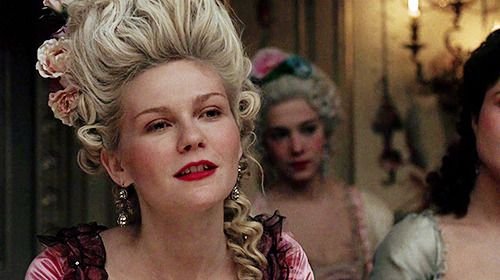
The gilded cage of Versailles, the opulent gowns, the whisper of revolution – few historical figures capture our imagination quite like Marie Antoinette. But when modern adaptations, from acclaimed films to recent Marie Antoinette TV Series Historical Accuracy & Context, choose to bend history, how do we navigate the fine line between creative license and genuine understanding? It's a question Sofia Coppola’s much-discussed 2006 film Marie Antoinette tackled head-on, proving that sometimes, historical "inaccuracy" can reveal a deeper truth.
This guide delves into the groundbreaking approach of Coppola's film, often seen as a foundational text for how historical narratives are reinterpreted today. We’ll examine its stylistic choices, its intentional anachronisms, and why a film initially dismissed as "vapid" has since become a cult classic, profoundly influencing how we tell stories about the past in the present.
At a Glance: Coppola's Marie Antoinette – More Than Just Cake
- Intentional Anachronism: The film deliberately blends 18th-century aesthetics with modern elements (like a Siouxsie and the Banshees song and Converse sneakers) to convey Marie's psychological state rather than strict historical fact.
- Empathy Over Accuracy: Coppola aimed for an "impressionist painting" of Marie Antoinette, focusing on her inner turmoil, loneliness, and lack of autonomy as a young woman thrust into an impossible role.
- Reframing the Narrative: It humanizes Marie as a struggling teenager, challenging the traditional "let them eat cake" caricature and forcing viewers to confront their preconceptions.
- A Cult Classic's Influence: Initially polarizing, the film is now recognized for pioneering modern reinterpretations of history, influencing works like Bridgerton and Persuasion by using historical backdrops for contemporary commentary.
- Style as Substance: The perceived "style over substance" was, in fact, the core message – reflecting the superficiality and confinement of royal life for Marie.
Beyond the Tiara: When History Gets a Modern Makeover
When we talk about the "Marie Antoinette TV Series Historical Accuracy & Context," it’s crucial to acknowledge the broader landscape of how historical narratives are being reimagined for contemporary audiences. While a dedicated TV series might aim for episodic depth, Sofia Coppola's 2006 film Marie Antoinette stands as a seminal example of a modern reinterpretation that profoundly influenced this very trend. It laid much of the groundwork for how filmmakers and showrunners approach historical accuracy, artistic license, and the humanization of larger-than-life figures.
Coppola's film wasn't designed to be a documentary. Instead, she described it as an "impressionist painting" of Marie Antoinette's life. This artistic decision freed her from the shackles of strict chronology and factual literalism, allowing for a more subjective, empathetic, and ultimately, more modern portrayal. For Coppola, the opulent style wasn't a distraction; it was the message, mirroring the superficiality and isolation that defined Marie's existence.
The Royal Treatment: Deconstructing Historical Accuracy Through Coppola's Lens
The moment Sofia Coppola’s Marie Antoinette opens, it shatters any expectation of a traditional costume drama. You see Marie (Kirsten Dunst) lounging in a fluffy white dress, feet casually propped on an ottoman, a pink-frosted cake tempting her finger. Then, the needle drops, and Siouxsie and the Banshees' "Hong Kong Garden" electrifies the scene, a defiant punk anthem jarringly out of place in 18th-century Versailles. This isn't an accident; it's a thesis statement.
The Infamous 'Let Them Eat Cake' & The Pink Hair Paradox
Let's clear the air immediately: Marie Antoinette never actually uttered the phrase, "Let them eat cake." This widely circulated myth, a powerful piece of propaganda against the monarchy, is a historical fabrication. Coppola's film subtly acknowledges this by showing Marie indulging in exquisite pastries, but never having her utter the infamous, damning words. It's a visual nod to the stereotype, instantly deflated by the film's more nuanced exploration of her character.
The opening scene, with its paradoxical blend of 18th-century styling and modern anachronisms (from Marie's implied "pink hair" rebellious attitude to the punk soundtrack), immediately signals Coppola's intent. She's not here to give you a history lesson as much as an emotional journey. This deliberate clash between eras highlights Marie's struggle to adapt to the suffocating confines of royal life, a teenager caught between two worlds.
Stripping Away the Monarchy: Marie's Journey to Loneliness
One of the most poignant examples of Coppola's "historical subversion" occurs when 14-year-old Marie arrives in France. She's depicted with pin-straight hair, a look more akin to a 2006 teenager, carrying a pug named Mops. This modern, relatable image is then brutally stripped away: she's divested of all her Austrian belongings, naked and vulnerable, her beloved dog taken from her.
This scene, blending fact with fantasy, powerfully conveys the profound loss of identity and autonomy Marie experienced upon entering the French court. It’s a literal and metaphorical stripping, designed to evoke empathy for her profound loneliness and disconnection, rather than simply presenting a historical event. The film frequently uses such moments to expose the isolation beneath the glamour, reminding us that even queens can be profoundly alone.
More Than a Royal Whim: The Enduring Female Struggle for Autonomy
Coppola’s cinematic signature, evident in her earlier work like The Virgin Suicides, consistently explores the existential loneliness and lack of autonomy faced by fashionable young women. In Marie Antoinette, this theme becomes a central pillar, reframing the monarch's intimate moments not as frivolous indulgences, but as desperate attempts to find control and self-expression within an intensely restrictive environment.
The film deliberately presents loneliness as a facet of the female condition, rather than the dismissive "female hysteria" that historical narratives often attributed to women who chafed against societal norms. You see Marie’s profound isolation in quiet moments – staring out a window, wandering through vast halls, or in a fleeting, almost fourth-wall-breaking glare into the camera. This last moment serves dual purposes: it conveys Marie's own deep loneliness and disconnection, and simultaneously highlights Coppola's self-awareness regarding her film's artistic liberties. It's an invitation for the viewer to connect with Marie's inner world, moving beyond the caricatures to understand the real human underneath the powdered wig.
From "Vapid" to Cult Classic: The Re-evaluation of Coppola's Vision
Upon its initial release, Marie Antoinette garnered mixed reviews. Critics often dismissed it as "vapid" and "style over substance," with some lamenting its "contemporary" feel and perceived squandering of the opulent Versailles location. Pete Hammond of Maxim Magazine and Susan Walker of the Toronto Star were among those who noted its modern sensibility, which at the time, felt jarring to many.
However, over time, the film has undergone a significant re-evaluation, solidifying its status as a cult classic. Coppola was, in many ways, ahead of her time. She dared to force empathy for a controversial historical figure, blending elements of teenage fashion, fun, and rebellion with meticulous historical styling. This approach allowed Marie Antoinette to become a "stand-in for modern teenage scapegoats" – a misunderstood young woman grappling with intense public scrutiny and societal expectations. What was initially seen as an artistic flaw is now understood as a deliberate, powerful choice.
The Ripple Effect: How Coppola's Marie Antoinette Changed Historical Storytelling
The influence of Coppola's Marie Antoinette on subsequent historical narratives is undeniable. By 2022, its pioneering spirit in blending reality and fantasy is evident in numerous productions that seek to make history resonate with contemporary audiences. Think of Shonda Rhimes' Bridgerton, with its deliberate colorblind casting that reimagines Regency-era England through a diverse, modern lens, or the recent film adaptation of Persuasion, which employs fourth-wall breaking to connect its heroine directly with the audience.
Coppola's film truly pioneered the use of historical backdrops not just to recount the past, but to offer insightful 21st-century commentary on themes like gender, power, and identity. It proved that enriching storytelling doesn't always require literal interpretations; sometimes, fostering connections between past, present, and future social dynamics requires a touch of anachronism and a bold artistic vision. To delve deeper into how various productions approach her story, you might want to Explore Marie Antoinette TV series episodes and see how they build on these narrative innovations.
Common Questions About Historical Accuracy & Artistic License
Navigating historical adaptations can raise a lot of questions about what's fact and what's creative liberty. Here are some common queries regarding films like Coppola's Marie Antoinette:
Q: Did Marie Antoinette really say "let them eat cake?"
A: No, she did not. The phrase "Qu'ils mangent de la brioche" ("Let them eat brioche," a richer bread) was attributed to "a great princess" in Jean-Jacques Rousseau's Confessions, published in 1765, when Marie Antoinette was only 9 years old and living in Austria. It was a popular anecdote circulated by revolutionaries to highlight the monarchy's perceived indifference to the plight of the poor, but there's no evidence Marie Antoinette ever uttered it.
Q: How historically accurate are the costumes and sets in Coppola's film?
A: The costumes and sets in Marie Antoinette are generally historically accurate for the 18th century, drawing heavily from period fashion and the lavish interiors of Versailles itself. Costume designer Milena Canonero won an Oscar for her work, showcasing exquisite detail and opulence. However, Coppola strategically introduced stylistic choices and anachronisms – such as vibrant, modern color palettes, Converse sneakers, or a scene featuring a pair of modern-looking shoes – to underscore themes of youth, rebellion, and consumerism, rather than a strict adherence to documentary realism. The goal was aesthetic and emotional resonance, not perfect historical recreation.
Q: Is it fair to portray Marie Antoinette as a "modern teenager?"
A: Coppola's portrayal of Marie Antoinette as a "lost, struggling teenager" is an artistic choice, not a claim of literal historical personality. The intent was to humanize a figure often demonized by history, making her relatable to a contemporary audience, especially young women grappling with similar feelings of isolation, societal pressure, and lack of control. By casting a modern lens on her experience, the film invites empathy and a fresh perspective, encouraging viewers to look beyond simplified historical narratives and consider the complex individual behind the crown.
The Legacy of Reinterpretation: Why it Matters for Today's Viewers
The conversation around Marie Antoinette TV Series Historical Accuracy & Context is ultimately about more than just dates and facts; it's about the power of storytelling. Sofia Coppola's film demonstrated that blending history with fantasy isn't a betrayal of the past, but often a richer way to understand it. By allowing ourselves to see historical figures as complex, flawed, and relatable individuals, we bridge the gap between centuries and find resonance in shared human experiences.
This approach encourages critical engagement, pushing viewers to question not just what happened, but why it mattered, and how those past dynamics continue to echo in our present. It's an invitation to cultivate empathy, to challenge preconceptions, and to recognize that history, in its most compelling forms, is always a conversation between then and now. So, the next time you encounter a historical drama that feels a little "off" from the textbooks, consider that it might just be opening a new window into a deeper truth.