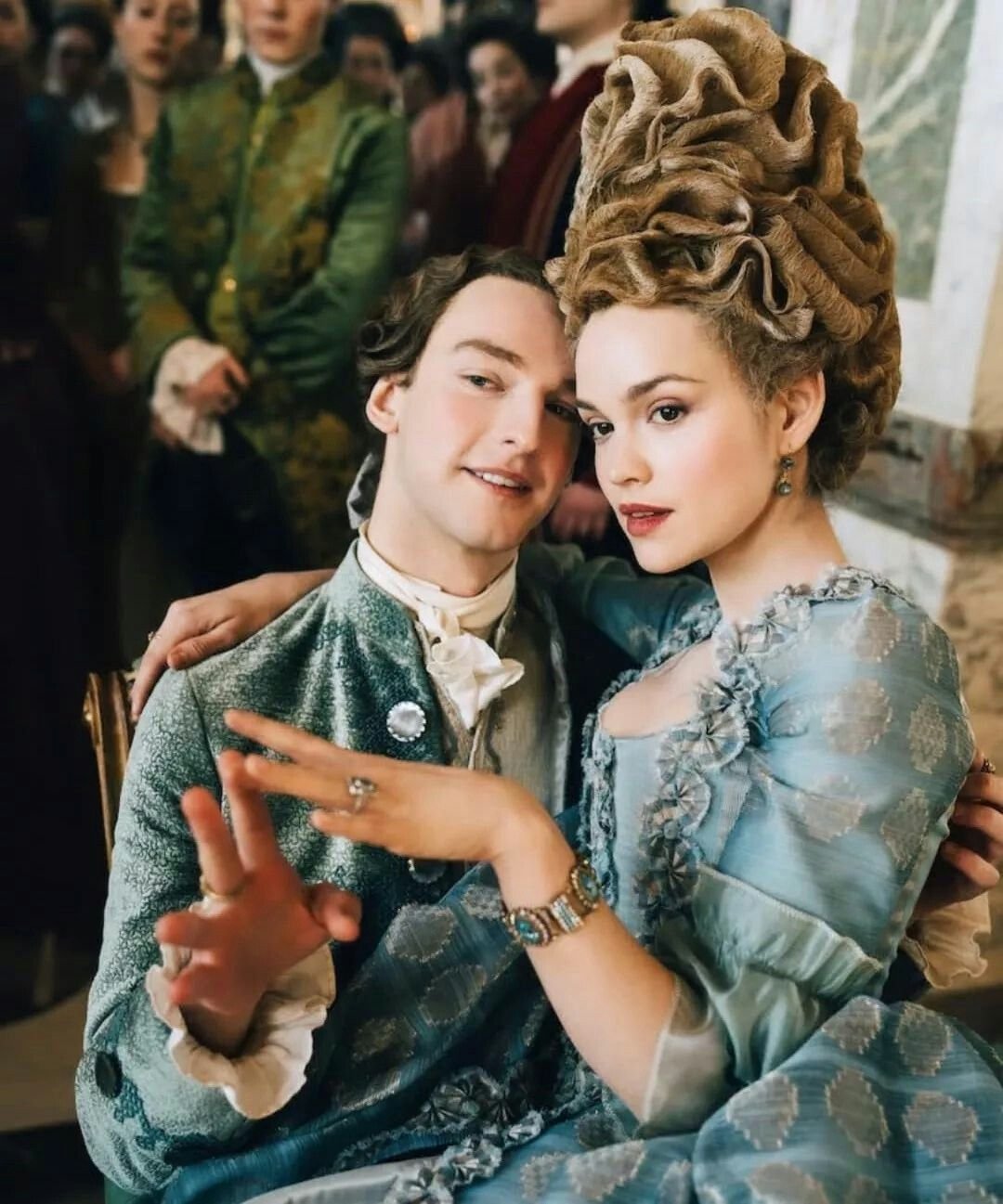
Step into the gilded, yet treacherous, world of Versailles, where the fate of a young Austrian archduchess became irrevocably intertwined with the destiny of France. The "Marie Antoinette" TV series, a sumptuous historical drama, plunges viewers into the complex life of the last Queen of France, meticulously charting her journey from a naive teenager to an iconic, often misunderstood, figure. If you're looking to understand the intricate Marie Antoinette TV Series Plot, Season Recaps & Storylines, you've come to the right place. We're breaking down the compelling narrative threads, character arcs, and the unique perspective this acclaimed series brings to a familiar historical saga.
At a Glance: What to Expect from the Marie Antoinette Series
- Creator: Deborah Davis (known for "The Favourite")
- Starring: Emilia Schüle as Marie Antoinette, Louis Cunningham as Louis-Auguste
- Unique Spin: A "feminist take" on Marie Antoinette's life, created by an all-female writing team for Season 1.
- Setting: Primarily the opulent, yet suffocating, French court of Versailles.
- Season 1 Focus: Marie Antoinette's arrival in France at 14, her arranged marriage to Louis-Auguste, her struggle to produce an heir, and her navigation of court intrigue.
- Season 2 Tease: The royal couple faces an unprecedented financial crisis and intensifying noble hatred.
- Production: A joint effort between BBC and Canal+, aiming for an international audience.
- Critical Reception: Varied, but often praised for its lavish production, compelling performances, and fresh perspective.
Setting the Scene: A Young Girl Thrust into Destiny
The series opens with Marie Antoinette's arrival in France, a mere 14-year-old girl plucked from the relative freedom of the Austrian court and thrust into the rigid, ceremonial world of Versailles. Her mission? To secure an alliance between France and Austria through marriage to Louis-Auguste, the Dauphin (heir to the French throne). This wasn't merely a political union; it was a deeply personal trial, as she grappled with immense pressure to produce a male heir, navigate relentless court gossip, and win over a wary public and a reserved husband.
Creator Deborah Davis, known for her sharp wit in "The Favourite," brings a distinct voice to this often-told story. The series, developed after the success of "Versailles" and commissioned by Canal+ for an English-language, international audience, seeks to humanize Marie Antoinette, stripping away layers of myth and caricature. It's an ambitious undertaking, particularly with an all-female writing team championing a the show's unique feminist interpretation of her life – a deliberate choice to offer fresh insight into a woman often condemned by history.
Filming for the series began in September 2021, taking full advantage of the grandeur of France's historical sites, including the Châteaux of Versailles, Vaux-le-Vicomte, Fontainebleau, Lésigny, Champs, and Voisins, along with Bry-Sur-Marne studios. These stunning historical filming locations lend an unparalleled authenticity and visual splendor to the production, immersing viewers in the opulent yet often claustrophobic reality of royal life.
Season 1 Recap: The Trials of a Teenaged Dauphine
Season 1, comprising eight episodes, meticulously chronicles Marie Antoinette's tumultuous early years at the French court. It begins with her arrival, a vibrant, somewhat rebellious spirit, clashing immediately with the stifling etiquette and treacherous undercurrents of Versailles.
Key Storylines in Season 1:
- The Arranged Marriage and Its Unspoken Challenges: Marie Antoinette's marriage to Louis-Auguste (played by Louis Cunningham) is central to the plot. Their relationship is fraught with challenges from the outset. Louis-Auguste is shy, awkward, and initially uninterested in consummating the marriage, creating immense pressure on Marie Antoinette to fulfill her duty as Dauphine and produce an heir. This protracted struggle becomes a public spectacle, fueling rumors and anxieties within the court and across Europe. The series delves into the emotional toll this takes on both young royals, showcasing Marie Antoinette's frustration and Louis-Auguste's own insecurities.
- Navigating the Viper's Nest of Versailles: The French court is portrayed as a hotbed of intrigue, where alliances shift like sand and reputation is everything. Marie Antoinette, as a foreign princess, is immediately under scrutiny. She faces hostility from various factions, including the King's mistresses and members of the old guard, who view her as an outsider. Her attempts to forge friendships and find her place are often met with manipulation and betrayal. This storyline highlights her vulnerability and her learning curve in a world where every word and gesture is dissected.
- The Pressure to Produce an Heir: This is perhaps the most significant driving force of Season 1. Without an heir, the future of the Bourbon dynasty and the Franco-Austrian alliance hangs precariously. Marie Antoinette is relentlessly reminded of her duty, enduring humiliating medical examinations and the constant whispers about her fertility. This pressure profoundly impacts her marriage, her self-worth, and her public image. The series effectively conveys the patriarchal expectations placed upon royal women and the intense psychological burden.
- Forming Alliances and Finding Her Voice: Despite the challenges, Marie Antoinette gradually begins to assert herself. She develops a close bond with her ladies-in-waiting and a surprising friendship with Louis-Auguste's younger brother, Provence (Jonas Bloquet), though his motives are often questionable. She learns to use fashion, parties, and social events as tools to project an image of power and charm, even as she secretly yearns for genuine connection and freedom. This arc shows her transition from a scared teenager to a more assertive, albeit still inexperienced, figure.
- The Role of Her Mother, Empress Maria Theresa: Marthe Keller delivers a formidable performance as Maria Theresa, Marie Antoinette's mother, who communicates with her daughter through letters, offering stern advice and reminding her of her royal obligations. These interactions underscore the political chess game at play and the remote influence of her homeland on Marie Antoinette's actions.
The first series premiered in France in October 2022, followed by a UK release in December 2022 and a US debut on PBS in March 2023. Viewers quickly became engrossed in theMarie Antoinette TV series episodes, eager to follow Emilia Schüle's captivating portrayal.
Character Deep Dive: The People Behind the Power
The series benefits from the incredible international cast bringing these historical figures to life.
- Emilia Schüle as Marie Antoinette: Schüle embodies the youthful vigor and initial naivety of the Dauphine, evolving into a more resilient, yet still vulnerable, figure. Her portrayal captures the paradox of Marie Antoinette – a woman desperate for personal freedom yet bound by public duty, often misjudged, and tragically ill-equipped for the seismic political shifts on the horizon.
- Louis Cunningham as Louis-Auguste (Louis XVI): Cunningham's performance is nuanced, presenting Louis-Auguste not as a bumbling fool, but as a shy, intellectually inclined, and often overwhelmed young man. His struggle with his royal duties, his faith, and his personal relationship with Marie Antoinette forms a significant emotional core of the series.
- James Purefoy as Louis XV: The aging king, navigating his own complex relationships and the impending succession, provides a glimpse into the court's established hierarchy and moral ambiguities.
- Marthe Keller as Empress Maria Theresa: A strong, authoritative presence, even from afar, her character represents the powerful dynastic forces at play and Marie Antoinette's familial obligations.
- Jonas Bloquet as Provence: Louis-Auguste's younger brother, Provence, is a constant presence, ostensibly supportive but subtly ambitious, hinting at the internal rivalries that would later plague the monarchy.
These performances, combined withcreator Deborah Davis's vision, aim to paint a more intimate portrait of figures often seen through the lens of revolution and propaganda.
Critical Reception: A Lavish, Divisive Spectacle
Upon its release, "Marie Antoinette" garnered a range of critical responses, reflecting its bold artistic choices and unique narrative approach.
- Praise for Style and Performance: The Guardian awarded it 4/5, praising Schüle and calling the series "Strange, funny, grotesque," and "hugely entertaining." TV Times and Weekend magazine both gave it a perfect 5/5, with the latter noting its "extravagant tapestry of excess and intrigue." Variety featured the show as a critic pick for Best International Series of 2022, highlighting Schüle's "riveting" performance, underscoring the success in capturing an international audience. The lavish costumes, intricate set designs, and the sheer scale of the production were consistently lauded, providing a feast for the eyes.
- Debate Over Historical Accuracy and Tone: However, not all reviews were glowing. The Telegraph and Financial Times both gave 3/5, with The Telegraph stating it was "not history" and the Financial Times calling it an "indulgent serving of cake." The Evening Standard gave it 2/5, describing it as a "standard traditional period drama." These criticisms often centered on the show's perceived liberties with historical fact and its contemporary tone, which some felt detracted from the gravitas of the historical events. This often leads to
the historical accuracy debatesthat are common with period dramas.
The mixed reception ultimately points to the show's deliberate attempt to break free from traditional historical drama conventions, favoring character development and a specific interpretative lens over strict adherence to every historical detail. It’s a series that provokes thought and discussion, inviting viewers to reconsider their preconceptions of Marie Antoinette.
Looking Ahead: Season 2 Storylines and Anticipation
A second season of "Marie Antoinette" was commissioned, promising to continue the compelling narrative. While details remain under wraps, the ground truth offers tantalizing hints at what's to come, with Deborah Davis returning as creator and a writing team led by Louise Ironside, Charlotte Wolf, Francesca Forristal, and Andrew Bambfield. Ed Bazalgette will direct the first four episodes.
Expected Storylines for Season 2 (Scheduled for 2025):
- Mounting Financial Crisis: As history tells us, France under Louis XVI faced severe economic hardship, exacerbated by lavish court spending and costly foreign wars. Season 2 will depict the royal couple confronting this "unprecedented financial crisis." This will undoubtedly test their leadership, their relationship, and their connection to the French people. Viewers can expect to see Marie Antoinette grappling with her image as "Madame Deficit" and the growing resentment towards the monarchy's perceived extravagance.
- Noble Hatred and Political Intrigue: The ground truth specifically mentions "noble hatred stirred by Provence and Chartres." This indicates a sharpening of political rivalries and a dangerous fragmentation within the French aristocracy. Provence, Louis XVI's ambitious younger brother, is poised to play a more overtly antagonistic role, potentially exploiting the kingdom's woes for his own gain. The Duc de Chartres (Louis Philippe II d'Orléans) would also have been a figure of considerable opposition, often aligned with liberal ideas and a rival branch of the royal family. This internal dissent will add layers of danger and uncertainty for the royal couple.
- The Queen's Evolving Role: With time, Marie Antoinette grew into her role as Queen, albeit one increasingly isolated and demonized. Season 2 will likely explore her attempts to exert influence, her relationships with her children (as she eventually bore several), and her public image as the pressures of the impending revolution build. It will delve deeper into her transformation from a flighty Dauphine to a figure of tragic resilience.
- The Widening Gulf Between Monarchy and People: As the financial crisis deepens and noble dissent grows, the series will undoubtedly portray the widening chasm between the opulent lives of the royals and the suffering of the French populace. This growing unrest sets the stage for the dramatic events of the French Revolution, positioning Marie Antoinette and Louis XVI precariously at the precipice of monumental change.
The eagerly anticipated Season 2 will delve into a period of profound historical upheaval, offering a more mature and embattled Marie Antoinette facing the escalating challenges that would ultimately lead to the downfall of the French monarchy.
Understanding the Legacy: Why This Story Still Matters
The "Marie Antoinette" TV series isn't just a lavish historical drama; it's a profound exploration of power, identity, and the relentless scrutiny faced by women in public life. By focusing on her formative years and emphasizing a "feminist take," Deborah Davis and her team invite us to look beyond the caricatures and propaganda to understand the human being caught in a maelstrom of political expectation and personal constraint.
Whether you're a history buff, a fan of opulent period pieces, or simply intrigued by the story of a young woman who became an unwilling symbol of an era, this series offers a rich, layered experience. It encourages us to question narratives, empathize with complex figures, and appreciate the enduring power of historical storytelling. As we await the next chapter, the first season stands as a vibrant testament to a queen's struggle for selfhood amidst the gilded cage of Versailles.