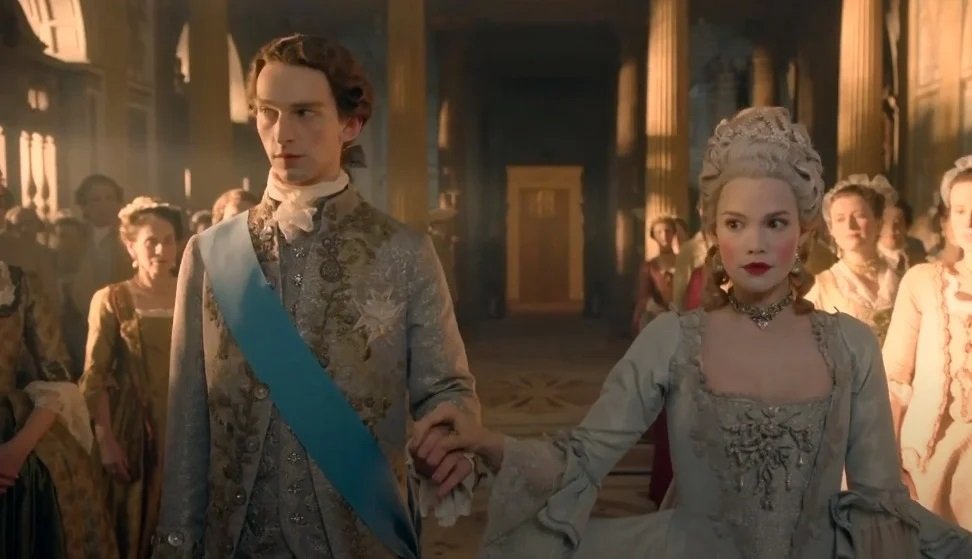
The opulent world of 18th-century Versailles has long captivated storytellers, but when the "Marie-Antoinette: Season 1" TV series premiered on CANAL+ on October 31, 2022, it didn't just walk onto the royal stage—it sashayed, glittered, and sparked a lively debate. Far from a unanimous standing ovation, the show's bold reimagining of France's last queen quickly garnered a truly mixed reception from both professional critics and everyday audiences. This isn't your grandma's historical drama; it's a vibrant, sometimes perplexing, attempt to strip away the myth and reveal the "pitifully vulnerable girl" beneath the towering wigs.
But did it succeed? And is it worth your time? Let's dive into the court intrigue of critical opinion and audience sentiment.
At a Glance: What You Need to Know About the Marie Antoinette Series Reception
- Bold Reimagining: The series aimed to offer a fresh, humanizing, and often "sexy" perspective on Marie Antoinette, focusing on her youth and vulnerability.
- Style Over Substance? Many critics lauded the show's visual flair and fresh energy but felt it sometimes lacked narrative depth, "speaking much while saying little."
- Polarizing Portrayal: While some found its quirky, grotesque elements charming, others struggled to connect with the "spoiled royals" and found the show superficial.
- Strong Performances: Despite mixed reviews on the show itself, performances—particularly from Mr. Purefoy—were consistently praised.
- Creative Liberties Taken: The series embraces historical inaccuracies to serve its narrative goals, which delighted some but alienated history purists.
- Not Your Average Period Piece: It's more akin to a modern drama set in period costume, aiming for relevance and emotional impact over strict historical adherence.
A Bold New Take on a Familiar Queen: Reclaiming Humanity in Versailles
When Deborah Davis and her writing team set out to create "Marie-Antoinette: Season 1," they weren't aiming for a dry, reverent historical document. Instead, their ambition was clear: to reclaim the humanity and agency of a figure often reduced to caricature. The goal was to portray Marie Antoinette not as the infamous symbol of excess but as a "pitifully vulnerable girl," thrust into an impossible position. This meant taking creative liberties, a deliberate choice to infuse the narrative with modern sensibilities and emotional resonance.
The series is a Drama, Biography, and History production, but it leans heavily into the dramatic, prioritizing character development and emotional arcs over strict chronological recounting. It envisions a young woman, isolated and under immense pressure, navigating a treacherous court while striving to find her own voice. This fresh perspective promised to peel back layers of historical judgment, offering a more empathetic lens through which to view her story. The show’s very premise set it up for a divisive reception: how far can you stretch historical reality in pursuit of emotional truth?
This isn't just about lavish costumes and grand palaces, though there's certainly no shortage of either. Davis's vision was to delve into the psychological landscape of the queen, exploring her relationships, her anxieties, and her desires. The backdrop of Versailles provided the perfect stage for exploring themes of power, womanhood, and identity, but it also raised questions about the delicate balance between dramatic interpretation and factual representation.
The Glitz and the Gaps: Why Critics Were So Divided
The critical reception of "Marie-Antoinette" was, to put it mildly, a tapestry of contradictions. Reviewers universally acknowledged the show's visual splendor and undeniable energy. It's a series that looks good, feels fresh, and certainly commands attention. However, this aesthetic triumph often came with a caveat: the feeling that the show prioritized style over content.
Many critics pointed out that while the series had a captivating aesthetic—gorgeous scores, vibrant cinematography, and impeccable costuming—its narrative depth sometimes lagged. It was often described as "speaking much while saying little," a common critique for shows that lean heavily on visual storytelling without fully developing their thematic underpinnings. You might find yourself mesmerized by a beautifully shot scene, only to realize afterward that it didn't significantly advance the plot or deepen your understanding of the characters.
One prominent sentiment was that the show felt "strange, funny, and grotesque." This descriptor captures the series' unique tone, blending historical drama with a touch of anachronistic humor and a willingness to embrace the more peculiar aspects of court life. For some, this unconventional approach was its greatest strength, offering a refreshing departure from traditional period pieces. It allowed for a playful, almost satirical, exploration of the absurdities of royalty. Others, however, found this tone jarring, making it difficult to fully immerse themselves in the drama or take the characters seriously.
The comparisons varied wildly, illustrating the show's polarizing nature. Some reviewers found it "fusty," implying a staidness or lack of modern appeal despite its contemporary aspirations. More strikingly, others likened it to "Love Island" – a reality dating show known for its interpersonal drama and superficiality. This latter comparison, while perhaps hyperbolic, underscores the feeling among some critics that the series, in its attempt to be "sexy" and relatable, sacrificed genuine dramatic weight for a more surface-level intrigue. The show's focus on seduction scenes, including those with Du Barry and Louis XV, was part of this "sexy narrative" approach, aiming to spice up the historical setting but not always landing with critical approval for its depth.
Amidst these varied opinions, one aspect consistently drew praise: the performances. Reviewers frequently highlighted solid acting across the board, with Mr. Purefoy earning particular mentions for his portrayal. Even when critics were unsure about the show's direction or narrative choices, they often agreed that the cast delivered compelling performances, elevating the material where the writing occasionally faltered. This suggests that while the creative vision behind the series sparked debate, the execution by the actors was largely successful in bringing their characters to life, regardless of whether the audience sympathized with them.
The Audience Verdict: Why Sympathy Was Hard to Come By (for Some)
While specific audience survey data isn't always as readily available as critical reviews, we can infer much about general audience reception by looking at the critics' struggles and the series' stated intentions. The show aimed to make Marie Antoinette a "vulnerable girl," but a common thread in the critical discourse—and likely reflected in audience sentiment—was the difficulty in finding sympathy for the "spoiled royals."
In an era where historical context often battles with modern sensibilities, portraying characters who embody extreme privilege can be a tough sell. Audiences, particularly those unfamiliar with the intricate power dynamics and isolated upbringing of 18th-century monarchy, might struggle to empathize with a queen whose problems, however real to her, appear trivial against the backdrop of common suffering. The "Love Island" comparison, while critical, also hints at how some viewers might have engaged with the show: less as a deep dive into history and more as a character-driven drama about powerful people with relatable (if exaggerated) personal dilemmas.
This tension creates a natural divide:
- Those who connected: Some viewers likely appreciated the show's efforts to humanize Marie Antoinette, seeing past the historical villainy to the young woman trapped by circumstance. They might have enjoyed the drama, the visual spectacle, and the unconventional storytelling. This segment of the audience might be more forgiving of historical inaccuracies, prioritizing emotional engagement and the unique visual style. For them, the series might have been an exciting reinterpretation, offering a fresh lens on a well-trodden story, much like other modern takes on historical figures.
- Those who didn't: Others, however, likely found the character's struggles unrelatable, viewing her as simply a spoiled royal. For this group, the creative liberties might have felt like a distortion rather than an enhancement, and the perceived lack of deep content might have left them unsatisfied. History buffs, in particular, might have been alienated by the anachronisms or the lighter tone, preferring a more faithful and serious depiction of the period. Their expectations for a "History" production might have been directly challenged by the show's more dramatic and interpretative approach.
The "sexy narrative" also plays a crucial role here. While intended to add intrigue and agency, for some, the inclusion of overtly sexual scenes—like the seduction scenes with Du Barry and Louis XV—might have felt gratuitous or distracted from the stated goal of portraying vulnerability. Instead of seeing a nuanced exploration of a young woman's awakening, some might have perceived it as a superficial attempt to modernize historical drama, pushing the show further into the realm of "entertainment" rather than "enlightenment."
Ultimately, the audience reception was likely as varied as the critical reviews, influenced by individual expectations, historical knowledge, and tolerance for creative interpretation. The series, for all its ambition, found itself caught between the desire to entertain a contemporary audience and the inherent challenges of reinterpreting a historical figure shrouded in centuries of myth and judgment. To understand the various viewpoints surrounding the Marie Antoinette series, it’s helpful to consider the historical accuracy of the Marie Antoinette series itself.
Creative Liberties: Reclaiming Humanity or Rewriting History?
The decision by Deborah Davis and her team to take "creative liberties" is perhaps the most significant factor shaping the reception of "Marie-Antoinette." This wasn't an accidental deviation from facts but a deliberate narrative strategy to achieve a specific emotional and thematic goal: to portray Marie Antoinette as a "vulnerable girl" and reclaim her humanity.
The Case for Creative Liberties:
- Emotional Resonance: By allowing for artistic interpretation, the series can craft more compelling emotional arcs. Strict adherence to historical minutiae can sometimes stifle dramatic flow. The writers could invent or re-contextualize events to better convey Marie Antoinette's internal struggles, her isolation, and her gradual assertion of agency. This approach is often seen in modern biographical dramas that aim to make historical figures relatable to contemporary audiences.
- Modern Relevance: Injecting modern sensibilities, even anachronistic dialogue or attitudes, can make a historical story feel more immediate and engaging for today's viewers. It's a way of asking: "What if Marie Antoinette thought or felt like a young woman today, albeit in a gilded cage?" This allows for themes of feminism, identity, and personal freedom to resonate more powerfully.
- Challenging Narratives: Creative liberties allow the show to actively push back against established historical narratives that might have unfairly demonized Marie Antoinette. By showing her as more complex and less overtly malicious, the series attempts to offer a corrective to centuries of judgment.
The Pitfalls of Creative Liberties: - Alienating History Buffs: For viewers who come to historical dramas seeking accuracy, creative liberties can be a major turn-off. Those deeply familiar with who Marie Antoinette really was and the precise details of the French court might find the alterations distracting or even disrespectful to the historical record. This demographic often expects a certain level of fidelity, and deviations can break their immersion.
- Risk of Superficiality: If liberties are taken without a strong underlying thematic purpose, they can feel gratuitous. The "sexy narrative," including seduction scenes with Du Barry and Louis XV, while intended to show agency or vulnerability, risked being perceived as superficial titillation rather than a meaningful exploration of character. It can lead to the "style over content" critique, where the dramatic flair overshadows genuine historical insight.
- Misleading Audiences: While entertainment is the primary goal, historical dramas also implicitly educate. Significant deviations from fact, if not clearly signposted or understood, can inadvertently perpetuate misconceptions about history, blurring the lines between fact and fiction for less informed viewers.
The series walks a tightrope, aiming for emotional truth rather than absolute factual truth. For some, this was a refreshing artistic choice, allowing the story to breathe and resonate. For others, it was a fundamental misstep, diluting the power of history in favor of contemporary melodrama. The success of this approach is inherently subjective and played a huge part in the show's mixed reviews.
The "Sexy Narrative": A Double-Edged Sword for Historical Drama
A significant component of Deborah Davis's vision for "Marie-Antoinette" was the inclusion of a "sexy narrative," featuring seduction scenes with figures like Du Barry and Louis XV. This was not merely for shock value, but an intentional choice designed to portray the queen's emerging humanity and agency within a highly restrictive environment. However, this aspect proved to be a double-edged sword in its reception.
How it aimed to serve the narrative:
- Displaying Agency: In a world where Marie Antoinette had little political power, her sexuality and relationships could be framed as one of the few arenas where she could exert some form of agency, even if subtly. Her interactions, romantic or otherwise, become a commentary on her struggle for control in a court where she was largely a pawn.
- Humanizing the Icon: By depicting her as a young woman with desires, vulnerabilities, and even mistakes in her personal life, the show aimed to strip away the myth and reveal a more relatable, flesh-and-blood person. The intimacy was meant to show her interior world, her attempts to connect, and the complexities of her situation.
- Contemporary Appeal: In a competitive streaming landscape, a "sexy narrative" can undoubtedly draw in viewers, especially those who might otherwise shy away from traditional period pieces. It promises drama, intrigue, and passion, making the historical setting feel more immediate and less stuffy. This is a common strategy employed by shows hoping to redefine best historical dramas available for streaming today.
The backlash and critical debate: - Perceived Gratuitousness: For some critics and audience members, the "sexy narrative" felt less like a nuanced exploration of agency and more like gratuitous titillation. When scenes are inserted primarily for their shock or visual appeal, they can detract from the deeper character development or historical context, leading to accusations of superficiality.
- Distraction from Core Themes: If the focus on seduction overpowers other narrative elements, it can inadvertently dilute the show's stated goal of portraying vulnerability. Instead of seeing a complex young woman, viewers might be left with the impression of a show primarily concerned with its aesthetic and scandalous elements.
- Historical Accuracy vs. Modern Tropes: While creative liberties are central to the show's premise, injecting overtly modern "sexy narrative" tropes can feel anachronistic and pull viewers out of the historical setting. The challenge for a writer like Deborah Davis's distinctive writing style is always to find the balance where historical context meets compelling drama.
- Du Barry and Louis XV: The specific inclusion of seduction scenes involving Madame du Barry and Louis XV is historically provocative. While Du Barry was indeed Louis XV's mistress, the nature and extent of Marie Antoinette's direct involvement in such intimate court dealings, particularly in a way that suggests agency through seduction, takes significant creative liberty. Understanding the historical context of Louis XV and Madame du Barry is key here to appreciate the show's departure from established facts. For some, this was a bold and interesting reinterpretation; for others, it crossed a line into historical fantasy.
The mixed reception of the "sexy narrative" highlights the ongoing debate in historical drama: how much modern interpretation is too much? When does a desire for contemporary relevance undermine the very history it purports to portray? For "Marie-Antoinette," this choice undeniably contributed to its vibrant, albeit polarizing, discussion.
Who Is This Marie Antoinette For? Finding Your Niche in Versailles
With such a divergent set of reviews and audience reactions, you might be wondering if "Marie-Antoinette" is the right show for you. It's clear this series isn't a one-size-fits-all historical drama. Understanding its target audience and what it doesn't offer can help you decide.
You'll Likely Enjoy "Marie-Antoinette" If:
- You Love Stylized Period Dramas: If you appreciate shows where visual artistry, costume design, and production values take center stage, often creating a feast for the eyes, this series will certainly deliver. It's beautiful to look at, with every frame carefully constructed.
- You're Open to Historical Reinterpretation: If you approach historical narratives with an open mind, willing to see familiar figures through a new, often anachronistic, lens, then the show's creative liberties won't deter you. You're looking for an emotional truth or a fresh perspective rather than a strict historical account.
- You Enjoy Character-Driven Dramas with a "Young Adult" Vibe: Despite its historical setting, the show often feels like a coming-of-age story for a young woman navigating a complex and hostile world. If you like stories about characters finding their voice and agency against immense odds, even if they're royal, you might connect.
- You Appreciate Bold, Unconventional Storytelling: The series has been called "strange, funny, and grotesque." If you're tired of predictable historical dramas and are looking for something that embraces quirkiness and isn't afraid to take risks with tone and presentation, "Marie-Antoinette" offers just that.
- You're Drawn to Intrigue and Personal Drama Over Political Machinations: While set in a political court, the show focuses more on Marie Antoinette's personal struggles, relationships, and emotional journey. If you prefer personal dramas with a historical backdrop, this might be for you.
You Might Want to Skip "Marie-Antoinette" If: - You're a Strict History Buff Seeking Accuracy: If historical fidelity is paramount to your enjoyment of a period piece, the creative liberties taken in "Marie-Antoinette" will likely frustrate you. The show unapologetically prioritizes dramatic narrative over strict facts.
- You Prefer Deep, Substantive Historical Analysis: If you're looking for a show that delves into the complex political, economic, or social realities of 18th-century France with academic rigor, you might find "Marie-Antoinette" too superficial. Its focus is more on personal drama than broader historical context.
- You Dislike Anachronisms: While some embrace them, others find modern dialogue, attitudes, or narrative choices jarring in a historical setting. If these pull you out of the story, the show's contemporary feel might not be to your taste.
- You Need to Sympathize with Protagonists Easily: If you struggle to connect with or find empathy for characters perceived as "spoiled" or privileged, even when their struggles are framed as "vulnerable," you might find it hard to invest in Marie Antoinette's journey.
- You're Looking for a Traditional, Grand Historical Epic: If your ideal historical drama is stately, serious, and epic in scope, "Marie-Antoinette" might feel too light, too quirky, or too focused on individual emotional beats rather than sweeping historical events.
This series carved out a distinct identity in the crowded landscape of historical dramas. It's a show with a specific point of view, designed to provoke thought and conversation, rather than simply recount facts.
Beyond the Glitz: What Worked and What Didn't in Versailles
Looking past the immediate reactions, we can distill the core strengths and weaknesses of the "Marie-Antoinette" series. This provides a balanced perspective, acknowledging its successes while recognizing where it might have fallen short for certain audiences.
What Worked Well:
- Visual Spectacle and Production Design: This is arguably the show's strongest suit. From the lavish costumes to the stunning sets of Versailles, the series is a feast for the eyes. The cinematography is often breathtaking, creating an immersive and beautiful world that critics frequently praised. This commitment to aesthetic excellence makes it a compelling watch even when the narrative wavers.
- Fresh Energy and Boldness: The series truly brought a "fresh energy" to a well-trodden historical figure. It wasn't afraid to take risks, challenge conventions, and infuse the story with a modern, dynamic pace. This boldness was a breath of fresh air for viewers tired of more traditional, reverent period pieces.
- Strong Performances: As noted, the cast, particularly Mr. Purefoy, delivered solid and engaging performances. The actors successfully embodied their complex characters, often elevating the material and adding layers of nuance even when the script might have leaned into simpler tropes. Their commitment to their roles helped anchor the drama amidst the show's more experimental aspects.
- Challenging Historical Perceptions: By actively attempting to humanize Marie Antoinette and portray her as "vulnerable," the series prompted viewers to reconsider their preconceived notions about the queen. It opened a dialogue about historical judgment and the biases inherent in how we remember figures from the past.
- Gorgeous Score: The musical score frequently received accolades, underscoring the drama and enhancing the show's overall aesthetic appeal. Music often plays a critical role in setting the tone and emotional landscape of a series, and "Marie-Antoinette" clearly invested in this aspect.
What Didn't Quite Land:
- Pacing and Narrative Depth: The criticism of "speaking much while saying little" points to an issue with pacing and the depth of the narrative. While visually engaging, some episodes or plotlines might have felt protracted or lacked significant development, leaving viewers wanting more substance beneath the surface.
- Superficiality vs. Empathy: Despite the intention to evoke empathy for Marie Antoinette, many found it difficult to connect with her struggles, perceiving them as superficial given her immense privilege. The balance between showing her vulnerability and acknowledging her royal excesses was a tough one to strike, and for some, the show leaned too heavily on the former without sufficiently grappling with the latter.
- Historical Accuracy Concerns: For a significant portion of the audience and critics, the extensive creative liberties were a stumbling block. While the show's creators saw this as a strength, it alienated those who value historical fidelity, leading to criticisms that it was more historical fiction than biography.
- Inconsistent Tone: The blend of "strange, funny, and grotesque" with serious drama and "sexy" elements could feel inconsistent. For some, this created an uneven viewing experience, making it hard to settle into a clear understanding of what the show was trying to be. Was it a drama? A satire? A romantic intrigue? The shifting tone could be perplexing.
- Lack of Broader Context: While focusing on Marie Antoinette's personal journey, the series sometimes neglected the broader political and social context of pre-revolutionary France. This might have left some viewers feeling that the world around the queen wasn't fully fleshed out, making her isolation feel less impactful.
In sum, "Marie-Antoinette" is a series that excels in its visual and performative aspects but struggles to maintain a consistent narrative depth and universal appeal in its interpretation of history. Its ambition is clear, but its execution sparked a fascinating and important debate about the role of historical drama today. For those interested in watching the series, a deeper understanding of its episodes can be found here: All Marie Antoinette episodes.
The Future of Historical Dramas: Lessons from Versailles
The mixed reception of "Marie-Antoinette" offers valuable insights into the evolving landscape of historical dramas. It underscores a growing tension between traditional expectations and modern storytelling approaches, highlighting several key lessons for creators and viewers alike.
First, authenticity is a spectrum, not a binary. Gone are the days when historical dramas were solely judged on their meticulous adherence to every known fact. "Marie-Antoinette" demonstrates that many audiences and critics are now open to shows that prioritize emotional authenticity or thematic relevance over absolute factual accuracy. The question is no longer if creative liberties are taken, but why they are taken, and whether they serve a compelling narrative purpose. Creators must be clear about their intent: are they aiming for a documentary-style recount, or a character study inspired by history?
Second, the "human first" approach can be a double-edged sword. The series' laudable goal of portraying Marie Antoinette as a "vulnerable girl" resonated with some, but it also exposed the challenge of generating empathy for figures from extreme privilege. Modern audiences, often more conscious of social inequalities, can struggle to connect with the woes of "spoiled royals" unless their struggles are framed with exceptional nuance and depth. This means future historical dramas attempting similar humanizations must work even harder to contextualize their characters' internal lives within their societal realities.
Third, style sells, but substance sustains. "Marie-Antoinette" proved that breathtaking visuals, fresh energy, and a "gorgeous score" can immediately capture attention and critical acclaim for production values. However, the recurring critique of "speaking much while saying little" suggests that visual splendor alone isn't enough to satisfy. Viewers, especially those investing in a multi-episode series, crave narrative depth, character development, and meaningful thematic exploration that goes beyond surface-level spectacle.
Finally, the audience is segmenting. This series clearly isn't for everyone, and that's okay. It found an audience that appreciates its unique blend of quirkiness, visual flair, and modern sensibilities, while alienating those who prefer stricter historical fidelity or more traditional narrative structures. This signals a future where historical dramas will continue to diversify, catering to niche tastes—from those seeking meticulous historical immersion to others looking for bold, anachronistic interpretations. The success of "Marie-Antoinette" isn't measured by universal acclaim, but by its ability to provoke conversation and offer a distinct, albeit polarizing, vision.
Your Turn: Deciding If Versailles Is Your Next Binge
So, is the "Marie-Antoinette" TV series for you? The answer, as you've seen, is as multifaceted as the queen herself. It's a show that dared to be different, to chip away at centuries of myth and present a young woman finding her way in a golden cage. It's beautiful, bold, and often baffling.
If you're looking for a period piece that challenges conventions, prioritizes visual artistry, and offers a contemporary lens on a historical icon, then pour yourself a glass of champagne (or perhaps a stronger drink) and give "Marie-Antoinette" a watch. Embrace its quirks, appreciate its performances, and let yourself be swept away by its unique energy.
However, if your ideal historical drama is one rooted in meticulous accuracy, deep political analysis, and a more traditional narrative structure, you might find yourself more frustrated than entertained. In that case, there are plenty of other historical epics awaiting your attention.
Ultimately, the best way to form your own opinion on "Marie-Antoinette: Season 1" is to experience it for yourself. Dive into the opulent, sometimes bizarre, world of Versailles and decide if this portrayal of the infamous queen resonates with you. It's a journey that promises vibrant visuals, intriguing performances, and certainly, a lot to talk about.